




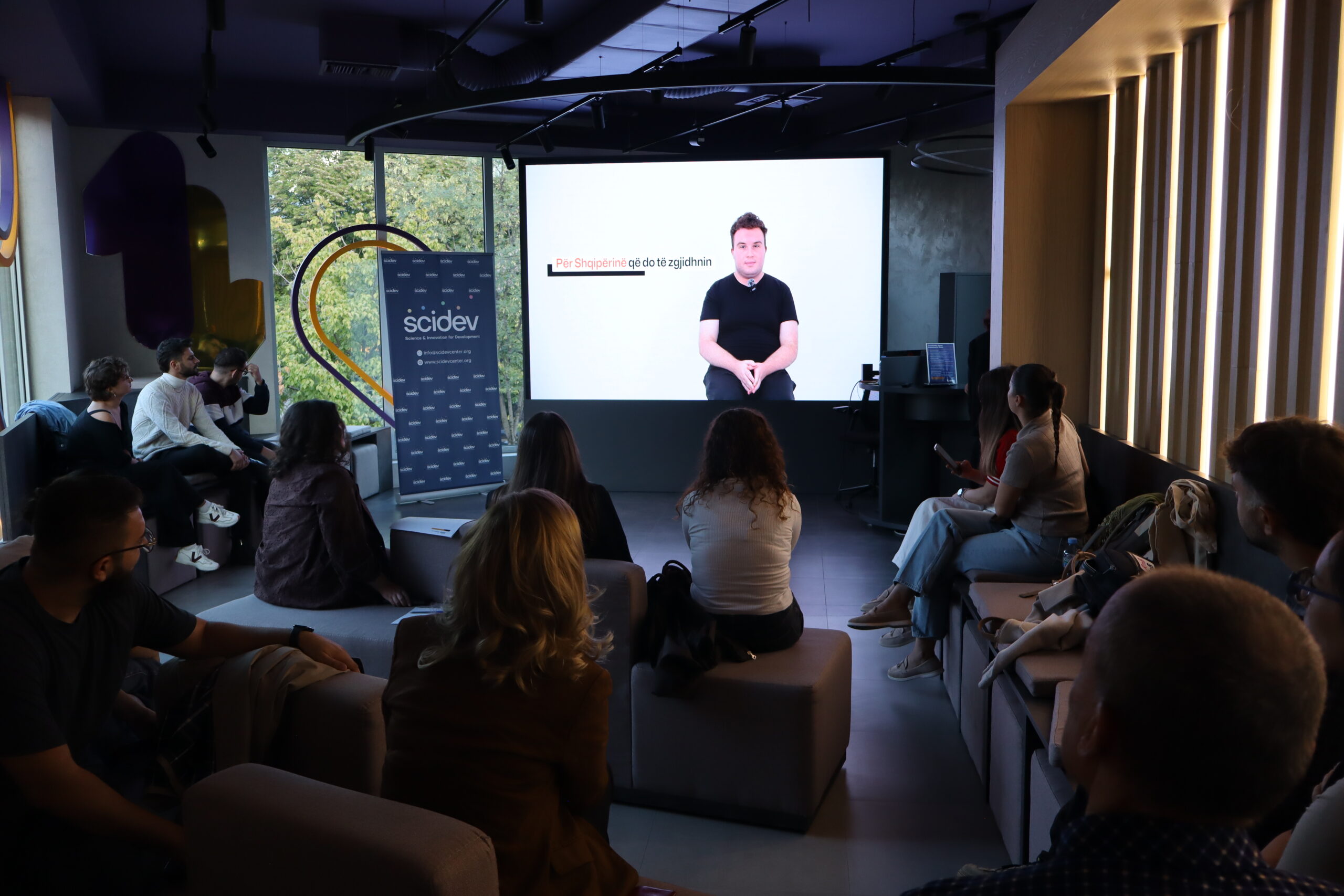
As migration from Albania continues, many young people face a difficult choice: build a future in a developing country or seek greater opportunities abroad. Public debate often focuses on why they leave, while giving less attention to what would make Albania a place where they could thrive. Led by RYLMP fellow Inva Hasanaliaj, the “Voices Before Departure” initiative set out to bring that question to the forefront.
“Voices Before Departure” is a short documentary centered on young Albanians who are planning to move abroad. Produced through the RYLMP Advocacy Action Grant it allows them to describe—in their own voices and without intermediaries—the Albania in which they would like to live. The advocacy grants scheme was launched at the end of the Tirana mobility in May 2026, after fellows had worked on the difference between research and evidence-based advocacy during the foundation training in December 2025.
The documentary had its public premiere on 25 September 2026, through an open screening and discussion event at One Connection Hub in Tirana. The screening was followed by an open discussion among young people and representatives from civil society, academia, and the private sector. The section below highlights key themes from the discussion.
The Question Is the Quality of Opportunities, Not Only Their Number
Participants emphasized that the reasons young people leave Albania extend beyond economics. The question is not simply whether jobs are available, but whether those jobs provide financial security, personal fulfillment, and a credible path for professional growth.
From there, the discussion broadened to the structural pressures shaping these choices. Participants cited the housing crisis, low wages, and rising costs, while also questioning whether existing opportunities truly respond to young people’s needs. Some felt that limited awareness prevents young people from recognizing their value for personal and professional development; others saw such opportunities as beneficial but temporary escapes from deeper systemic problems.
Weak Guidance and Limited University–Private Sector Cooperation Slow the Transition to Work
Education emerged as another closely related concern. Participants questioned both the quality of the education system and its capacity for cross-sector collaboration. They identified limited guidance as a major barrier to professional advancement, noting that young people often struggle to navigate an overwhelming amount of information without adequate support. Universities’ limited engagement with the private sector was also seen as hindering the transition into the labour market.
Meritocracy as the Main Condition for Staying
When asked what would encourage them to remain in Albania, several participants pointed to meritocracy and the prospect of living in a highly capable society. They argued that a society in which excellence is rewarded and people can contribute where their skills are best suited would strengthen confidence in the country’s future and motivate more young people to stay and contribute.
Despite their differing perspectives, participants agreed that systemic reforms and professional development opportunities should complement one another rather than be treated as mutually exclusive choices. Ultimately this approach would increase the odds of seeing meaningful desired change in the Albanian society.
Looking ahead
The full documentary is now available on SCiDEV’s YouTube channel, with additional screenings planned for the coming months. The documentary translates the findings of RYLMP migration paper into a strong message to all decisionmakers looking forward to acting on creating conditions for retaining the energies of the Albanian Youth within the country.
This advocacy campaign is inspired by the findings of the policy paper on migration conducted as part of the Regional Youth Leadership Mobility Programme (RYLMP), implemented by SCiDEV in Albania, Youth Educational Forum in North Macedonia, and Youth Initiative for Human Rights in Serbia.