

Albania’s tourism sector is one of the fastest-growing in Europe. In 2024, the country welcomed a record 11.7 million international visitors. Tourism now accounts for 26.4% of GDP and it got there by growing at 52.8% in five years, while the broader Albanian economy grew by just 3.6%. One in four lek in this economy comes from a visitor ordering food, sleeping in a hotel, and sitting at a restaurant table.
That same visitor leaves behind food waste that nobody is measuring.
This is the central contradiction Albania has not dealt with yet: that the sector driving the most economic growth is also the sector about to face the most stringent environmental compliance requirements in the country’s EU accession process, and it is almost entirely unprepared for what that means.
The Law Has Changed, and Businesses Don’t Know It Yet.
In October 2025, the revised EU Waste Framework Directive entered into force. It is now binding law across EU member states, and it will become binding for Albania as part of the EU accession process.
What it actually requires is quite simple.
The European Parliament, in March 2024, voted to propose targets of 20% reduction in food waste for processing and manufacturing, and 40% for retail, restaurants, food services, and households. Those were ambitious targets, and they generated significant press coverage. What ultimately passed into law, following negotiations concluded in February 2025, was more modest: 10% reduction for food processing and manufacturing, and 30% per capita reduction for retail, restaurants, food services, and households, all to be met at the national level by 31 December 2030.
There is a detail in the revised directive that almost no one in Albanian policy is talking about, and it matters for a tourism-heavy economy: the Commission will adopt implementing acts establishing a correction factor specifically to account for tourism, to help member states achieve food waste reduction targets by taking into account the impact of tourism on waste generation. Albania stands to benefit significantly from this. But benefiting from it requires data, which requires tracking.
The window to build that data foundation is now.
Why Hospitality Carries the Heaviest Burden
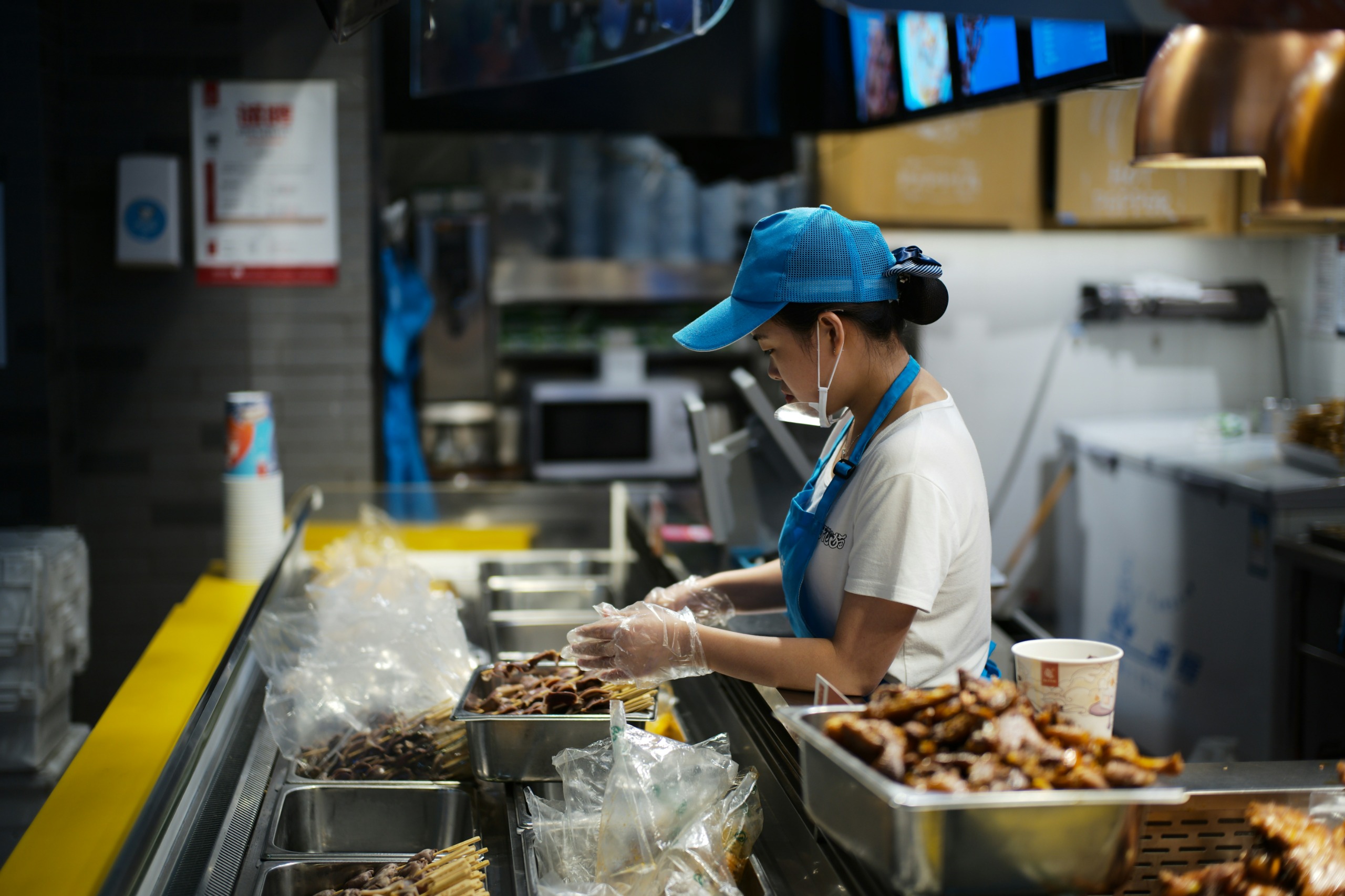
The 30% reduction target is not spread evenly across the economy. Manufacturing gets a 10% target because the political calculus favored larger industrial operators. The burden of the remaining ambition falls disproportionately on restaurants, hotels, food service providers, and retail. These are, in Albania’s case, predominantly small and medium-sized businesses: family-run restaurants, boutique hotels, and catering operations serving everything from corporate lunches to wedding banquets.
The global data on hospitality food waste is damning. Hotels alone generate 79,000 tonnes of food waste annually worldwide, representing nearly 10% of all commercial food waste. Hospitality and food service businesses collectively produce around 87 million tonnes per year. At the kitchen level, a case study of a hotel lunch buffet found that 46% of food produced was never consumed. Buffets, banquets, seasonal overpreparation, and inconsistent portioning are structural problems, not individual failures.
The Business Case: Compliance as a Revenue Strategy
Before getting into what compliance requires operationally, it is worth making the financial argument plainly, because this is where most conversations about food waste go wrong.
Food waste reduction is treated as a sustainability initiative, but that framing undersells it. The correct framing is that food waste reduction is one of the highest-return operational investments available to a hospitality business.
For every $1 invested in reducing kitchen food waste, hotels save on average $7 in operating costs. This figure, documented by the World Wildlife Fund and the World Resources Institute, is derived from case studies across hospitality operations in multiple markets. For restaurants, ReFED’s 2023 impact report found the return is even higher: every $1 committed to food waste reduction generates $14 in return.
The mechanism is simple. When you measure what you waste, you buy less of it. When you buy less, your food cost percentage drops. When your food cost drops, your margin improves without changing your menu, your pricing, or your staffing. Then, the savings compound.
Early data from Rivara Flow‘s pilot deployments illustrates this directly. Across restaurant-scale operations, pilot clients diverted 650kg of organic waste annually and up to €20,000 in annual savings. These are numbers from restaurant-scale businesses in the Western Balkans, operating in the same market conditions, with the same seasonal pressures, and the same infrastructure constraints as most small and medium businesses in Albania. For hotels and larger catering operations, the figures scale significantly higher.
What Compliance Actually Requires From Your Business
The Waste Framework Directive, translated into operational terms, creates four distinct workstreams for any hospitality business:
1. Establish a Baseline
What this means in practice: you need a systematic way to log what you throw away, by category, by date, and by service type. Eyeballing a bin does not count. A notebook in the kitchen is a starting point but not a reporting instrument. A digital system that timestamps, categorises, and stores waste data is what compliance actually requires.
2. Track Reduction Over Time
Meeting a 30% reduction target is not a one-time action, but a trajectory. You need to show, over time, that the amount of waste your operation generates is trending downward relative to your baseline. This means consistent, comparable data collected using the same methodology across months and years.
Inconsistent measurement is the most common failure mode. A business that measures carefully in January, loosely in summer, and not at all in the off-season cannot demonstrate a credible reduction trajectory. Digital systems that make logging the default are the only realistic solution for operations with high staff turnover and seasonal fluctuation.
3. Report in a Compatible Format
As Albania’s Chapter 27 alignment progresses, national reporting frameworks will need to aggregate data from businesses across the hospitality sector. Your data needs to be exportable, structured, and formatted in ways that are compatible with those frameworks. A spreadsheet maintained by one staff member and stored on a local hard drive is not a reporting instrument for regulatory purposes.
4. Redistribute Surplus
The revised directive requires that member states take measures ensuring economic operators with a significant role in waste prevention facilitate the donation of unsold food that is safe for human consumption. This means surplus food management is not optional. Your tracking system needs to distinguish between food that is wasted and food that is redistributed, because the latter counts toward your reduction target.
This is where the circular economy dimension of food waste management becomes concrete for a business. What you don’t throw away and instead redirect is legally counted.
The Infrastructure Gap Is Real but Solvable
Albania’s Chapter 27 challenge is significant. The environment chapter contains 73 directives that Albania must approximate in its legislation. The country has requested 13 transitional periods — more than any other chapter, for sectors including waste management. EU and international assessments consistently identify the same core problem: the gap between legislative alignment and actual enforcement is wide, public administration capacity is stretched, and the private sector is operating largely without forward visibility on what compliance will look like.
A January 2025 consultation session hosted by Albania’s Ministry of Environment chaired by the Chief Negotiator for Chapter 27 was still presenting civil society with the initial screening report findings. An initial negotiation position draft had only been submitted in September 2024. The full draft was compiled in January 2025.
This is the reality of accession timelines, and it means businesses cannot wait for top-down guidance before they start building the infrastructure that compliance requires.
What Albania needs and is largely missing is a layer of accessible, affordable, operationally realistic digital tools that allow small and medium hospitality businesses to begin measuring, tracking, and reducing food waste now, without waiting for national reporting frameworks to be finalized.
The Opportunity Nobody Is Naming
Food waste in hospitality does not require new landfills, new treatment plants, or new industrial infrastructure. It requires measurement, behavioral change, and the right tools. In addition, the sector it targets is Albania’s fastest-growing economic driver.
Albania is one of the countries most positioned to make a legitimate case for favorable correction but only if it has the data to make that case.
The businesses that start measuring now are not just preparing for compliance but building the baseline that protects them when national targets are set. They are capturing savings that improve their margins today and creating the audit trail that will matter when accession timelines accelerate.
What to Do Now: A Practical Starting Point with Rivara Flow
If you run a restaurant, hotel, or food service operation in Albania, here is what the next six months look like with Rivara Flow.
Month 1–2: Start measuring. You cannot manage what you do not measure. Rivara Flow helps logging food waste by category (preparation waste, plate waste, spoilage) for every service.
Month 3–4: Identify your highest-waste categories. After eight weeks of data, patterns will emerge. The dishes generating the most plate waste, the ingredients spoiling most frequently, the service types producing the most surplus. We identify the intervention priorities as the biggest savings opportunities.
Month 5–6: Connect waste data to procurement. Rivara helps you adjust ordering based on what the data shows. If a specific ingredient consistently goes to waste on Tuesdays, you are buying too much of it. If a buffet item is regularly returned uneaten, you have to cut it.
Ongoing: Document everything. Every kilogram diverted and every adjustment to procurement or production is your compliance record. Rivara Flow makes everything accessible.
We have built this platform to make all of this operationally straightforward for a Western Balkans hospitality business without requiring a sustainability team, a large budget, or a technical background. We handle the measurement, the analysis, and the reporting. Your team handles the food.
A Final Note
The 2030 deadline is real and the infrastructure gap is significant, but the businesses that will be in the strongest position in 2030 are not the ones that start thinking about food waste compliance in 2029.
Albania’s tourism boom is not slowing down. Eleven million visitors in 2024, a projected quarter of GDP, a sector that has outgrown the rest of the economy by fifteen times in five years. The hospitality businesses are the main characters of Albania’s Chapter 27 compliance story whether they know it or not.
The ones who understand this should already start measuring.
Rivara Flow is an AI-powered food waste tracking and circular economy platform designed for hospitality and food service businesses in the Western Balkans. For pilot inquiries and partnership information, visit rivaraflow.com
Author: Luena Mullaj Founder of Rivara Flow